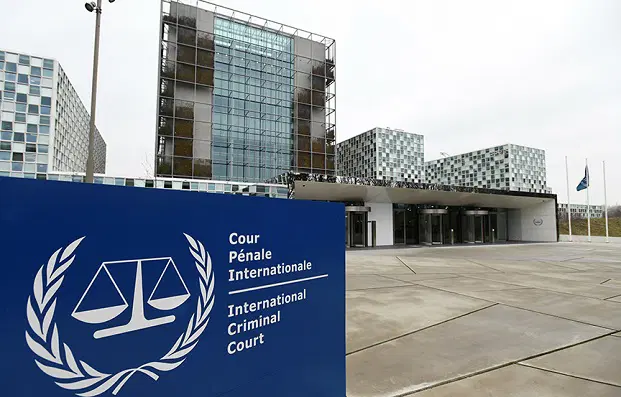
In a landmark move, the International Criminal Court (ICC) on Tuesday announced arrest warrants for two senior Taliban leaders, accusing them of committing crimes against humanity through the targeted persecution of women and girls.
According to an official statement, the ICC judges confirmed there are reasonable grounds to suspect Taliban Supreme Leader Hibatullah Akhundzada and Chief Justice Abdul Hakim Haqqani of orchestrating a broad, systematic attack on women and girls based on gender. The court stated that while the Taliban have imposed general restrictions on the population, their laws and policies have specifically stripped Afghan women and girls of their fundamental human rights.
The judges noted that the Taliban deprived girls and women of their rights to education, privacy, and family life, along with the freedoms of movement, expression, thought, conscience, and religion. In addition, people were allegedly targeted due to expressions of sexuality or gender identity that conflicted with the Taliban’s interpretation of Islamic law.
The court said these acts occurred between August 15, 2021, when the Taliban regained control of Afghanistan, and January 20, 2025. The ICC, headquartered in The Hague, is mandated to prosecute war crimes and crimes against humanity but lacks its own police force. It relies on its 124 member states to execute arrest warrants. This effectively bars anyone named in such a warrant from safely traveling to those member countries.
After returning to power in 2021, the Taliban promised a less brutal rule than their earlier regime between 1996 and 2001. However, that promise quickly faded. The United Nations has described the Taliban’s governance as a form of gender apartheid. Edicts issued by Akhundzada and enforced by the Taliban have excluded women and girls from public life entirely. Girls were banned from attending secondary school, and women were later barred from universities, making Afghanistan the only country in the world with such educational bans.
Women were also removed from government positions, with many being paid to stay home. Other policies closed beauty salons, banned women from parks, gyms, and bathhouses, and prohibited them from traveling long distances without a male guardian. Women were also forbidden to sing or recite poetry in public, and new rules demanded that both their voices and bodies be concealed outside the home.
When applying for the arrest warrants in January, ICC Chief Prosecutor Karim Khan described the Taliban’s actions as “an unprecedented, unconscionable, and ongoing persecution.” He said this step sends a clear signal that the treatment of women and girls in Afghanistan is unacceptable. Khan added that further arrest warrants for other Taliban officials are in progress.
#Taliban #ICC #Afghanistan #WomensRights