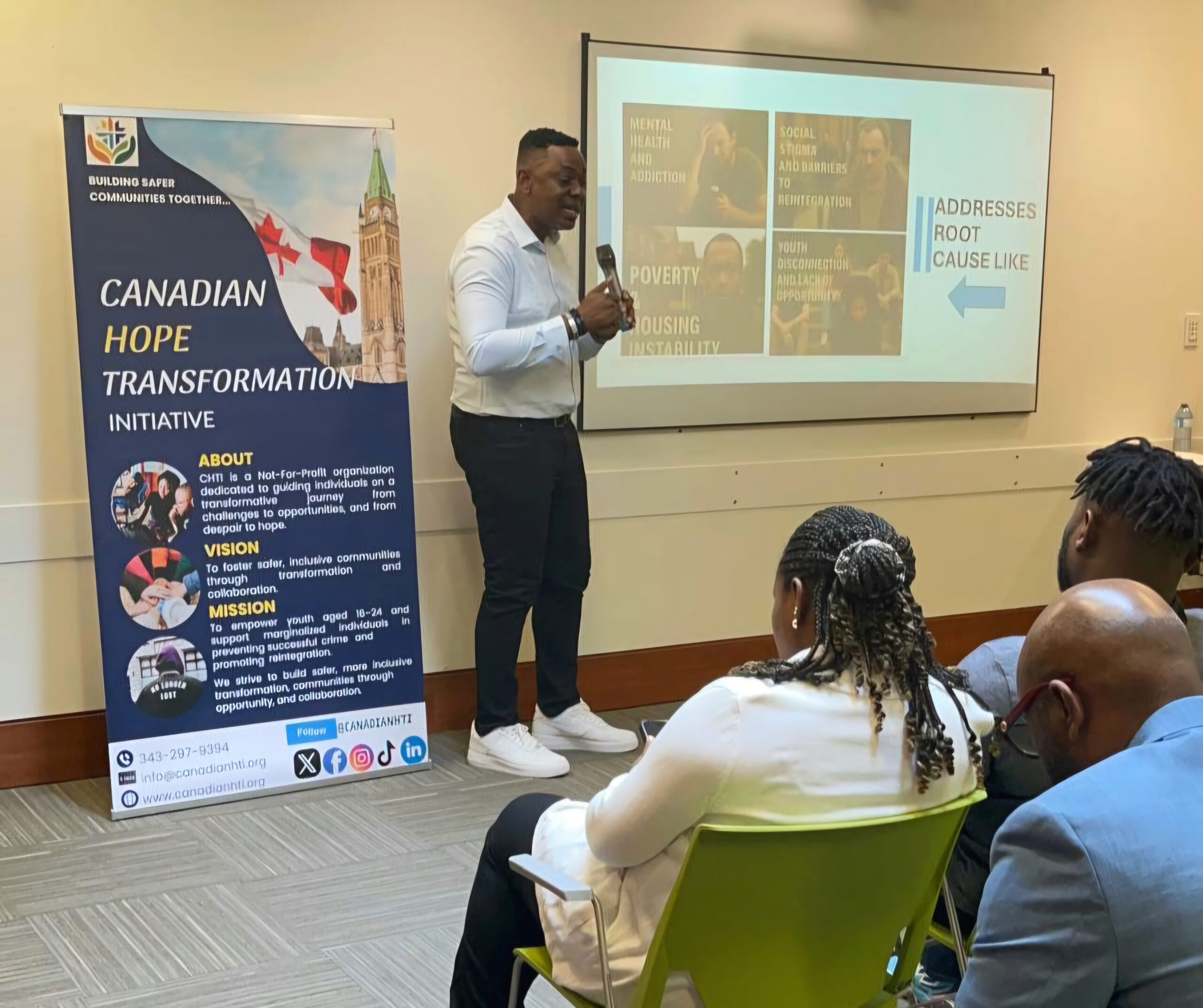
The Canadian Hope Transformation Initiative (CHTI) has called on communities to play a more active role in preventing crime and helping former offenders reintegrate into society. The call came during Hope Conference 1.0, held recently at the Beaverbrook Branch of the Ottawa Public Library.
The conference, which brought together community leaders, advocates, professionals, and citizens, focused on the theme “Collaborative Pathways to Community Safety.” It underscored the idea that crime prevention should not be seen as the job of law enforcement alone, but as a shared responsibility across society.
In his keynote address, CHTI Founder and Chief Operating Officer Emmanuel Tobi said real safety comes from unity and mutual support. “We can’t continue treating crime prevention like it belongs to the police alone. This is a community issue—our issue,” he said. “Real change starts when we build bridges, not walls.”
Tobi stressed that communities must be involved in shaping solutions that support not only crime prevention but also the successful reintegration of those who have served time. His message was echoed by Ottawa Mayor Mark Sutcliffe, who described the conference in a letter as “a forum to examine crime prevention through education, collaboration, and community empowerment.”
The event featured a panel of experts and advocates with legal, technical, social, and lived experience. Each speaker shared unique insights into the deeper causes of crime and the importance of offering second chances.
Criminal lawyer and former soldier Geoff Haskell addressed the challenges within the justice system, pointing out that people are often punished far beyond their mistakes. “Justice isn’t just about what’s legal—it’s about what’s fair,” he said.
Temi Sam, a tech entrepreneur and youth mentor, spoke on the power of technology in redirecting young people from crime. “We must invest in their minds and give them reasons to dream,” he said, noting that tech tools used to build global companies can also empower youth in disadvantaged communities.
Chris Draper, a CHTI board member with personal experience of incarceration, gave a powerful testimony about his journey and transformation. He called for more compassion in how society treats people returning from prison. “Everyone deserves a second chance, not a lifetime sentence outside of prison,” he said.
Social impact strategist Ifeoma Okonji emphasized the need for communities to be involved not just in consultation, but in the design and implementation of reintegration programs. “True empowerment happens when communities co-create the systems meant to serve them,” she said.
The Hope Conference 1.0 served as a strong reminder that community engagement is key to building safer, more inclusive cities. CHTI hopes to continue the conversation and inspire partnerships that bridge gaps between the justice system, service providers, and the public.
As the organization works to expand its reach and impact, it calls on individuals, institutions, and policymakers to move from passive concern to active participation. After all, as CHTI continues to emphasize, a safer society begins with a stronger community.