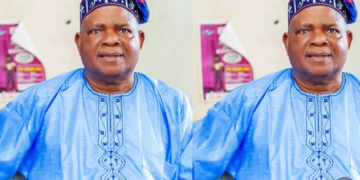
The Movement for the Survival of the Ogoni People (MOSOP) has said that it is deceptive for oil resumption merchants to claim that oil resumption will create jobs for Ogoni people, stressing that it will further enrich the country’s 37 states.
MOSOP president, Fegalo Nsuke, who fielded questions from reporters in Pot Harcourt said that the false narrative about job creation through oil resumption is a “divide and conquer strategy and a setback for the commitments of MOSOP to see to a permanent resolution of the Ogoni problem.”
The MOSOP president said that the Ogoni people were tired of manipulations by individuals who manipulate the system to take everything to themselves without caring about the future of the Ogoni people.
Nsuke said providing security assistance and cleaners for oilfields cannot be what the Ogoni people will consider as benefits of a struggle that has consumed some 4,000 lives.
Nsuke, urged all parties especially the oil industry to be honest and truthful about the situation in Ogoni, and approach the Ogoni situation realistically, stressing that deception and propaganda cannot lead to a permanent resolution.
Nsuke called for an investigation into the wrongful execution of nine Ogonis including Ken Saro-Wiwa, and the controversial circumstances in which four prominent Ogoni citizens died in May 1994, as well as the alleged killing of some 4,000 Ogonis by the Nigerian military should be addressed.
He questioned how much jobs were created by Shell during its three decades of oil exploration in Ogoni, noting that no operational changes were expected.
Nsuke held that the Ogoni problem should not just be about oil production, but how and where the revenue from oil sales is invested, because it is how the monies are deployed that create jobs.
Nsuke said: “Deception can achieve temporary goals but will be counterproductive in the long-term and we should not rely on deception to gain entry into the Ogoni oilfields.
“Shell operated the Ogoni oilfields for 30 years and couldn’t create jobs and nothing has changed in terms of operations so how will jobs be created if we do not agree on the Ogoni interests?.”
“The fact is that once the pipes are laid, the oil is simply pumped to the export terminal, the revenue goes to a federation account from which Ogoni is not entitled to an allocation.
“Therefore, there is nothing our people will benefit outside cleaning and security services. Oil production, therefore, will not create jobs in Ogoni. What will create jobs is how much of the revenue generated from the sale of oil is injected into Ogoni development” Nsuke said.
He said the intentions of MOSOP in canvassing the resumption of oil production in Ogoni through the operationalization of the Ogoni Development Authority, a development blueprint MOSOP adopted in September 2000, was to secure the future of the Ogoni people.
He added that it was also aimed at ensuring that the Ogoni people embrace the idea of oil resumption and build peace in Ogoni communities in a way that is acceptable to the people so that there is a permanent resolution of the problem and a secured future for the people.
“Cities like Lagos, Calabar, Abuja, Enugu, Kano were not built from the income of security men and cleaners working in oilfields. They were developed by allocations from Ogoni oil revenues and Ogoni will want that fair treatment in resolving the present impasse.”
“If we are talking seriously about resolving the problem and promoting justice and mutual benefits, Ogoni development should be a priority. That justice demands that a fair share of the revenue derived from natural resource extraction in Ogoni should be committed to Ogoni development and not shared amongst few Ogoni politicians and their allies in the name of equity.
“MOSOP’s proposal to government is that the oil operator should commit 20 percent of its profits to Ogoni development. That was part of the resolutions of the Ogoni Congress of November 30 2024 and MOSOP stands by those resolutions because they are in the best interest of our people and provide a simple, clear path to a resolution.”