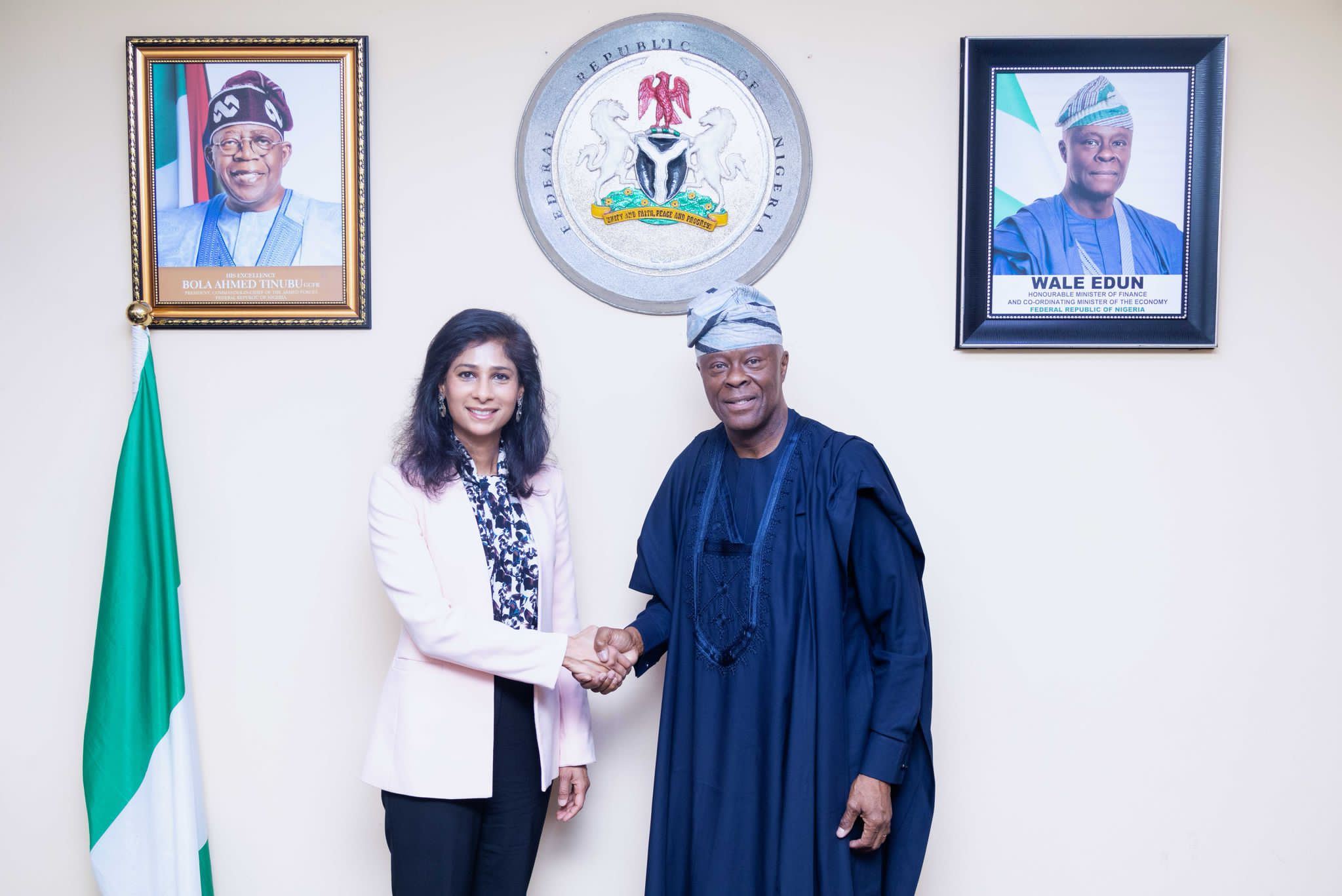
The International Monetary Fund ( IMF) has expressed confidence in the federal government’s steps to address high cost of living and accelerate social support to vulnerable population.
The Fund’s First Deputy Managing Director Gita Gopinath who is currently in Abuja expressed confidence in the government reforms initiative when she met with Minister of finance and coordinating Minister of the economy Mr Wale Edun.
The high-level discussions focused on economic reforms, private sector investment, and Nigeria’s engagement in global financial affairs.
A statement issued by Director of information in the ministry Mohammed Manga on the visit, said Gopinath acknowledged the economic challenges facing Nigeria and underscored the importance of targeted social interventions.
“We discussed Nigeria’s outlook and efforts to address the high cost of living, including the need to accelerate social support,”, she stated, reaffirming the IMF’s commitment to supporting sustainable economic policies.
Edun outlined Nigeria’s efforts to enhance social investment programmes, noting that the government is transitioning to a biometric-based, transparent system to improve efficiency and accountability.
He stated that the government is also advancing tax reforms, revenue assurance mechanisms, and digitalisation to strengthen domestic resource mobilisation. Additionally, crude oil production has increased from 1.2 million to 1.7–1.8 million barrels per day, significantly boosting national revenue.
Highlighting the role of private sector investment, the Minister emphasised policy shifts aimed at expanding renewable energy, improving the investment climate for solar, and promoting service exports.
HM Edun also addressed electricity sector reforms, advocating for expanded metering to enhance efficiency.
On the international front, discussions focused on Nigeria’s participation in global financial policy and efforts to secure fairer and improved credit ratings for African economies.
Edun stressed that enhancing fiscal data transparency could strengthen Nigeria’s credit profile, attract investors, and reduce borrowing costs.