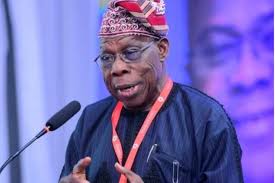
Former President Olusegun Obasanjo has expressed concern over Nigeria’s growing debt profile.
Speaking during a Zoom Meeting, Obasanjo said the debt is a significant burden for both present and future generations.
Obasanjo said, “Yes, I was able to secure debt forgiveness for the nation before I left office, but our present debt profile is a problem for both this and the next generation.”
Despite these concerns, the former President maintained optimism about Nigeria’s future, calling for transformative leadership and a robust fight against corruption to improve the nation’s trajectory.
Obasanjo cited South Korea and Singapore as examples of nations whose progress was rooted in merit-based and integrity-driven leadership.
He noted that South Korea’s focus on appointing leaders based on merit and Singapore’s emphasis on integrity under former Prime Minister Lee Kuan Yew are models Nigeria can emulate.
“The best way to fight corruption is from the top. In South Korea, their leaders make appointments based on merit, and that has become the country’s legacy.
“When I took students from the Olusegun Obasanjo Leadership Institute to meet Lee Kuan Yew, he spoke to them about leadership grounded in trust and integrity. Leadership must be about service, not self-enrichment,” he said.
Obasanjo also criticised those who view leadership as a means to personal gain, adding that corruption in government could only be eradicated by creating a critical mass of individuals committed to refusing illicit gains.
“The fight against corruption must be consistent. It’s not a one-regime affair. It must be a daily commitment. If one administration lets its guard down, corruption spreads like a hydra-headed monster,” he warned.
Obasanjo further emphasised the need for constitutional amendments to address Nigeria’s systemic challenges, stating that sustainable development and national integrity hinge on transparency, accountability, and divine purpose.
“National progress is only achievable through consistency in action, leadership built on accountability, and the collective effort of leaders and citizens committed to a shared vision for the nation,” he said.
As at the end of the second quarter of 2024, Nigeria’s debt had surged by N12.6 trillion in three months, reaching N134.3 trillion ($91.3 billion).
This marks a 10.35% increase from the N121.7 trillion recorded in the first quarter of the year.