
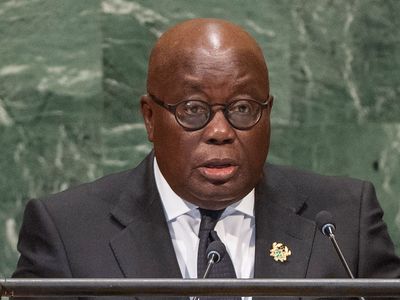
Ghana’s presidential election has been overshadowed by violence following a fatal shooting at a polling station in Nyankpala, which left one person dead and another injured. The incident reportedly occurred when an opposition candidate attempted to lodge a complaint but was blocked by supporters of the ruling party, leading to a violent confrontation. Four suspects have been arrested in connection with the shooting, and soldiers have been deployed to restore order in the area.
Despite this isolated incident, voting across much of Ghana has been largely peaceful. Ghanaians began queuing before dawn to cast their votes in a high-stakes election focused on economic concerns. The nation is currently grappling with a severe debt crisis, high inflation, and rising living costs, making economic recovery a top priority for voters.
This election marks the end of President Nana Akufo-Addo’s tenure, as he has served the constitutional maximum of two terms. The race to succeed him features familiar figures and emerging contenders. Former President John Mahama of the opposition National Democratic Congress (NDC) is seeking a political comeback, while Vice President Mahamudu Bawumia of the ruling New Patriotic Party (NPP) aims to become Ghana’s first Muslim president.
Notable candidates also include businessman Nana Kwame Bediako, who has garnered support from younger voters, and Alan Kyerematen, a former member of the NPP running independently. The ballot includes Nana Akosua Sarpong Frimpomaa of the Convention People’s Party (CPP), who is the only female candidate in the race. Akua Donkor of the Ghana Freedom Party, another female candidate, passed away in October, but her name remains on the ballot due to procedural issues.
In addition to the presidential race, voters in 275 constituencies are electing members of parliament. Approximately 19 million Ghanaians are registered to vote, with polling stations open from 7:00 a.m. to 5:00 p.m. GMT. Ghana’s electoral commission has promised to announce results within three days. If no candidate secures more than 50% of the vote in the first round, a run-off will take place by the end of December.
Economic hardship has been a central issue in this election. Ghana has struggled with soaring inflation, which peaked at 54.1% in 2022, pushing many citizens into poverty. The nation also defaulted on debt repayments that same year and continues to negotiate with international lenders to restructure its loans.
These challenges have influenced the rhetoric of the leading candidates. Vice President Bawumia defended the NPP’s performance, stating, “Notwithstanding the challenges, we have performed better than the government of John Dramani Mahama.” Meanwhile, Mahama rallied supporters with a vision for change, saying, “It is a choice between the Ghana we have today and the Ghana we want together—a Ghana of opportunity, prosperity, and justice for all.”
Ghanaians of all ages shared their hopes for the future. Serwaa Yeboah, an 18-year-old graduate voting for the first time, said, “It is important to vote to choose the best for your country.” Kojo Yeboah, a 95-year-old retired university worker, echoed this sentiment, emphasizing the importance of education and job creation for the youth: “The next leader must focus on education and jobs for the youth.”
Ghana’s democracy, which has been stable since the return of multi-party politics in 1992, faces a crucial test. No political party has won more than two consecutive terms, and voters now face a choice that could significantly shape the nation’s future amid substantial economic and social challenges.