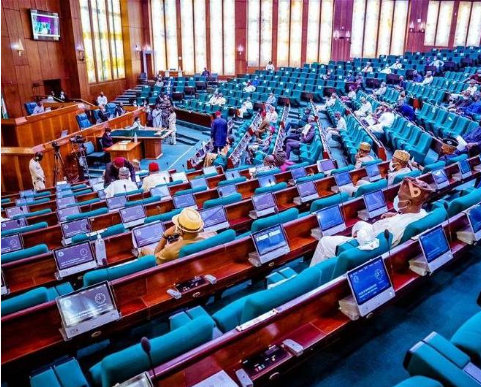
The House of Representatives has urged the Federal Government to immediately reverse the recent increase in the prices of petrol and cooking gas, citing the severe economic challenges faced by Nigerians. The price of Premium Motor Spirit (petrol) has surged to ₦1,030 per litre, driving up transportation costs across major cities in the country.
This resolution, calling for executive intervention, came after the adoption of a motion of urgent public importance moved by Minority Leader Kingsley Chinda and 100 other lawmakers during Wednesday’s plenary session. The legislators emphasized the need for immediate action to alleviate the economic strain on citizens.
Titled, “Urgent Need to Suspend the Increased Cost of Petrol and Cooking Gas in the Country and Provide a Stop-gap,” the motion called attention to the hardship Nigerians have faced in meeting their basic needs in the past few months.
Speaking on the essence of the motion, Chinda, a member of the Peoples Democratic Party, expressed concern over the recent hike in the prices of petrol and cooking gas, saying the development is creating an unsustainable financial burden on ordinary Nigerians and exacerbating the cost of living.
He said, “The removal of fuel subsidies, coupled with global oil price volatility and naira depreciation, has contributed significantly to the rising cost of petrol at the pump and cooking gas for households.
“We are worried that the escalating fuel and gas prices are impacting the cost of transportation, food, essential goods, and healthcare, further increasing inflation and pushing many families into deeper financial hardship.
“The House is concerned that businesses, particularly small and medium-sized enterprises, are struggling to manage their operational costs due to increased fuel prices, threatening economic stability and job security.”
Chinda recalled that the President Bola Tinubu-led government had previously announced plans to repair domestic refineries and boost local refining capacity to address these challenges, lamenting, however, that “it has yet to deliver significant results in this regard.”
The rising cost of petrol and cooking gas, according to the lawmaker, “poses a significant threat to the livelihoods of millions of Nigerians, and unchecked inflationary pressure caused by the increased prices can lead to social unrest, increased poverty rates, and negative long-term economic effects.”
He added that unless urgent and pragmatic steps are taken to control the rising costs of petrol and cooking gas, Nigeria will enter “an economic crisis leading to negative outcomes like increased crime and mortality rates.”
Contributing to the debate, House Minority Whip, Ali Isa, condemned the incessant increase in the prices of petroleum products, saying, “The people are suffering because of the increase in fuel prices. The government should allow the people to breathe and should not remove the cylinder that gives Nigerians a little oxygen.
“The government should listen to the cries of the people and take steps to review any policy that will affect Nigerians negatively. Those who signed this motion believe that their people, and by extension, the Nigerian people, are suffering.”
Also speaking, the member representing Kanke/Pakshin/Kanam Federal Constituency in Plateau State, Yusuf Gagdi, said the motion speaks to the current challenges that Nigerians are facing.
“We speak to draw the government’s attention to do things that will improve the welfare of Nigerians,” he said.
On his part, Deputy Minority Whip, George Ozodinobi, said the increase has rendered the ₦70,000 new minimum wage meaningless, given the rise in the cost of goods and services.
“Our people cannot transport their farm produce to the market, and because of that, there is an increase in food prices. We must pressure the government. We also need to review our Organisation of the Petroleum Exporting Countries (OPEC) policy. We don’t have to be in OPEC, as that is the only way we can address this issue,” he said.
Following the adoption of the motion, the House called on the Nigerian National Petroleum Company Limited, the Ministry of Petroleum Resources, and other relevant agencies to “expedite action on the repair and maintenance of domestic refineries to enhance the nation’s local refining capacity as a stop-gap measure to reduce dependence on imported refined petroleum products.”
The House also urged the Central Bank of Nigeria to implement monetary policies “that will mitigate the adverse effects of fuel price hikes on inflation, particularly with regard to essential goods and services.”
The House of Representatives has urged the Tinubu-led government to explore alternative energy sources and diversify Nigeria’s energy mix to reduce reliance on petrol and gas. The lawmakers advocated for promoting renewable energy solutions that are more sustainable and affordable in the long term.
Additionally, the House called on state governments to implement policies that ease the financial burden on citizens, such as offering tax waivers or reducing levies on transportation and goods affected by the rising fuel costs.