
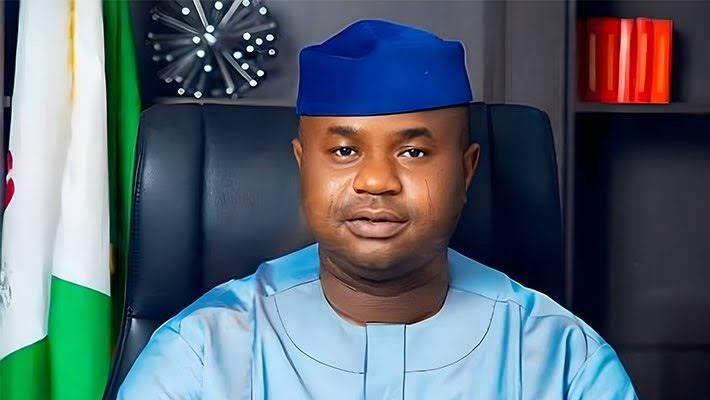
Chairman of the Federal Inland Revenue Service (FIRS), Zack Adedeji, has explained that the four tax reform bills recently presented to the National Assembly by President Bola Tinubu are not aimed at increasing taxes or introducing new taxes.
Adedeji, who made the clarification at a meeting with the House of Representatives Committee on Finance said the bills were to harmonise all tax laws scattered in different tax laws and establishment bills.
He said “We want to harmonise all the tax laws because we have tax laws scattered in different tax laws and different establishment laws passed. The implications of that is the multiplicity of taxes that people talk about because each agency that has tax law must implement that tax law.
“No agency is superior to the other and you cannot ask one agency not to carry out the order. So, Mr. President saw that this is not good for the economy and the only way to do that is to harmonise all the tax laws and have them in one place.
“The other reason is to organise the fiscal framework in the country. As we stand today, there is no law anywhere to actually regulate or monitor Cryptocurrency. We are in a global community and there is no way we can exclude ourselves from what is happening globally. So, I be of the hills is to organise the fiscal efficiency in the fiscal framework”
According to him, “This is to synergise all revenue collecting agencies. One of thet things we also consider is efficiency in government spending. For example, prior to the implementation of TSA, the government will have money in one bank and be borrowing from another because we don’t have the holistic view.
“But when TSA was implemented, it gave us a holistic view of where government monies are. With that, you will not have money on one bank and be borrowing from another.
“Another principle is to improve the transparency and integrity of revenue collection and there is nothing that we will do other than understanding the laws so that they will be very simple to comply with.
“We also want to complete our tax laws in order to represent the current realities that we have. Currently, we are using the tax integrity test of 1939 when there was no internet, no online shopping. In other to align ourselves with current realities, it is the wisdom of Mr. President that all thesey bills be implemented. We also want to align ourselves with international standards.
“Nigeria is a destination for investment, where people will consider where will give them the best return on their investment. One of the things to consider is the fiscal framework for the destination for their investment. So, in other to align ourselves with the international standard and attract investment into Nigeria, Mr. President presented these bills.
“It is also aimed at broadening our tax laws. Mr President has said is not interested in taxing poverty and inflation.
“We will never increase either the rate or the number of taxes. In fact it is the belief of the president that the taxes we have now should be harmonised and then, we should have less than two digital types of taxes. This is what has been put together in the bills that have been sent to the House.
“In terms of the structure, first is to have the Nigeria Tax act, which will harmonise all tax laws in the country and put them in one book. What this will do is that all the multiplicity of taxes will reduce because we will not have them in one book.
“For example, the Education Tax Act, which provides for payment of 2 percent and increased to 3 percent by the Finance Act, in the police Trust Fund, you ask them. To charge 1 percent of a certain amount. If you go to NASENI, they have a certain percentage and you ask NUPRC to charge royalties. In all these laws, what has been an issue is compliance either from the companies or individuals that want to comply.
“The second is the Nigeria Tax Administration Act, which will harmonise the administration of all taxes, which spelt out what tax should be paid, at what time it should be paid and ensure uniformity. So, people will not be moving from one place to the other seeking to comply.
“The Nigeria Revenue Service Act repeals the FIRS act and brings the service to where it is already. Today, you call us Federal Inland Revenue as if we only collect money for the federal government or only collect money in Nigeria.
“It was like that when the service was established, but today, one of the revenue we collect is VAT and 85 percent of this VAT goes to the states. So what we are doing is not in line with what you call us”, he explained.
Earlier, chairman of the House Committee on Finance, James Faleke (APC, Lagos) said the aim of the meeting was to give members firsthand information on the necessity of the bills so that they can make informed contributions when the bills come up for second reading.