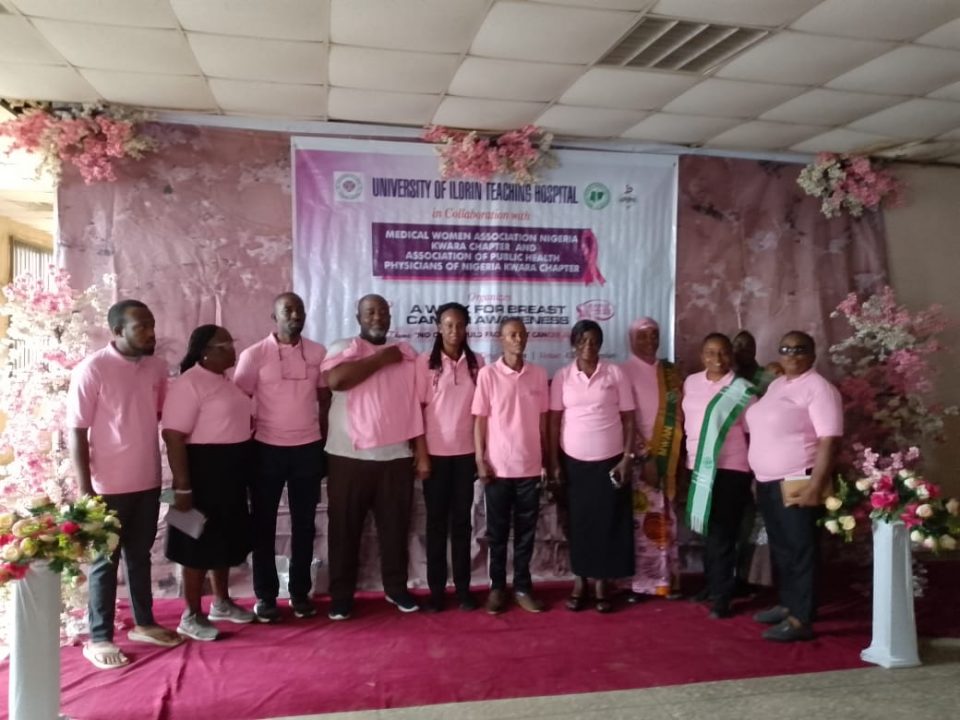
The Chief Medical Director of the University of Ilorin Teaching Hospital (UITH), Professor Abdullah Yussuf, has emphasized the importance of regular cancer screenings for both men and women, noting that men are also susceptible to breast cancer.
Professor Yussuf shared this during the ‘Walk for Breast Cancer Awareness’ event held on Monday in Ilorin as part of activities marking Breast Cancer Awareness Month at UITH. The programme was organized in collaboration with the Medical Women Association of Nigeria under the theme, “No One Should Face Breast Cancer Alone.”
In an interview during the event, Professor Bilyaminu Abayomi, Chairman of the Medical Advisory Committee at UITH, who represented the CMD, explained that breast cancer occurs when malignant cells develop in the breast tissue. He highlighted several risk factors for breast cancer, including advancing age, obesity, harmful alcohol consumption, family history of the disease, radiation exposure, reproductive history, tobacco use, and postmenopausal hormone therapy.
The CMD said the theme “No One Should Face Breast Cancer Alone” is apt, as it helps to raise awareness and drive behaviour change against the stigmatization of those with the disease.
“Cancer is a dangerous disease that can affect human beings and does not discriminate against gender; it is not only women who should go for screening, but males should also endeavour to go for periodic screening for early detection of cancer and be sure of their status,” he counseled.
He further explained that the sensitization programme aims to promote knowledge sharing, provide a platform for disseminating breast cancer information, and emphasize the importance of regular screenings, as early diagnosis can save lives. According to him, breast cancer is not a death sentence, and those diagnosed early have a better chance of effective treatment.
Consultant General Surgeon of UITH, Dr. Olushola Fasiku, also highlighted the significance of raising awareness about breast cancer, noting that it remains the leading cause of cancer-related deaths in women. He revealed that over 2 million new cases are reported globally each year. Fasiku pointed out that myths and misconceptions still surround breast cancer, but reassured that with available treatments, people can survive the disease. He also urged men to undergo screenings, as they are not exempt from the risk.
Adding her voice, Dr. Mojirola Fasiku, a Consultant Public Health Physician from UITH’s Department of Epidemiology and Community Health, noted that one in every eight women will be diagnosed with breast cancer. She expressed concern over the increasing incidence of the disease and called on stakeholders to support those battling cancer. Dr. Fasiku also cautioned against the stigmatization of cancer patients, emphasizing that the disease is not contagious.