Mpox vaccines have been administered for the first time in Africa, with several hundred high-risk individuals receiving the shots in Rwanda, according to the African Union’s Centers for Disease Control and Prevention (Africa CDC). On Tuesday, 300 doses were administered near the border with the Democratic Republic of Congo (DRC), a region heavily affected by the virus.
The DRC has reported nearly 22,000 cases and more than 700 deaths from mpox between January and August. Africa CDC Director General, Jean Kaseya, announced that vaccinations in the DRC are scheduled to begin in the first week of October.
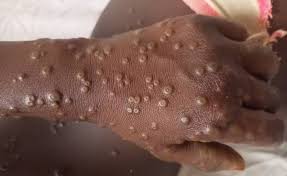
Mpox, formerly known as monkeypox, is transmitted from animals to humans and can spread between humans through close physical contact. The disease causes fever, muscle aches, and painful skin lesions, and can be fatal in some cases.
The World Health Organization recently prequalified the MVA-BN mpox vaccine, enabling international agencies like the UN to procure it for wider distribution. So far, the Africa CDC has reported 29,152 cases and 738 deaths across 15 countries on the continent.
“Mpox is not under control,” said Kaseya.
According to the WHO prequalification, the vaccine can be administered to people over the age of 18 as a two-dose injection given four weeks apart.
With most mpox cases and deaths in the DRC occurring in children, the WHO emphasized that the vaccine could be used “off-label” in infants, children, and adolescents, as well as in pregnant and immunocompromised individuals.
“This means vaccine use is recommended in outbreak settings where the benefits of vaccination outweigh the potential risks,” the WHO stated in a recent briefing.
The agency also recommends single-dose use in outbreak settings where supplies of the vaccine are constrained. However, more data is needed on vaccine safety and effectiveness in such circumstances, it stressed.
It noted that the currently available data showed that a single dose of the MVA-BN vaccine given before exposure had an estimated 76% effectiveness in protecting against mpox, while two doses were estimated to be 82% effective.