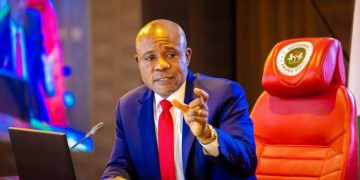
As the Nigerian Law School commences its new academic session today, a significant development has emerged, stirring controversy. Fresh students have been instructed to pay a tuition fee that has skyrocketed by 60%, defying directives from the House of Representatives.
In this new academic cycle, students are confronted with a hefty bill of N476,000 for the 2023/2024 Bar Part II session, a stark contrast to the previous N296,000. This drastic fee adjustment has sparked outrage and debate among students and lawmakers alike.
The new fee structure was disseminated through a schedule of fees released by the Council of Legal Education, Nigerian Law School Headquarters in Bwari, Abuja. The directive, signed by Director General Prof. Isa Hayatu Chiroma, SAN, has left many questioning the rationale behind such a sharp increase.
This contentious issue stems from a clash with the House of Representatives’ resolutions. On February 21, 2024, the House emphatically called on the Council of Legal Education to halt the increment of Nigerian Law School fees. This directive followed a motion by Obinna Ginger, acting on behalf of Kingsley Chinda, who was unable to attend the session to present his sponsored motion.
In response to the House’s resolution, committees on Tertiary Education and Services were tasked with delving into the matter and presenting viable solutions within two weeks for further legislative action. The urgency of the situation cannot be overstated, as emphasized by the House.
During the debate titled “Need to check the 60 percent increase in the Nigerian Law School Fees,” Obinna Ginger drew attention to critical factors, including Nigeria’s alarming inflation rate. He highlighted that the country currently faces a 27.33% inflation rate, as reported by the Nigerian Bureau of Statistics. Trade economics projections suggest this figure could soar to 30% by December 2024, adding weight to the argument against such a substantial fee hike.