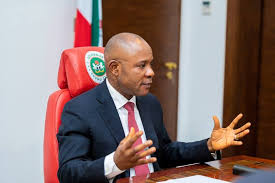
The Minister of Finance and Coordinating Minister of the Economy, Wale Edun, recently discussed the Federal Government’s plan to tackle economic hardship in the country. In an interview with Channels Television, he covered a range of issues, including the cost of living, inflation, cash disbursements to households, food security, and collaboration with the Central Bank of Nigeria, as well as interest rates.
The cost of living in Nigeria has risen, leading to protests in certain parts of the country following the removal of fuel subsidy and the floating of the naira.
Edun explained that the government had anticipated the rise in the cost of food and other essential items due to its reforms. He noted that food prices, in particular, had gone up because of the expected increase in inflation as macroeconomic measures and corrective reforms take effect. Edun added that the Federal Government is working to alleviate the hardship, especially for the poor and vulnerable.
He mentioned that the President’s focus is on keeping his promise to the poor and vulnerable, and that the government is implementing an intervention programme. The programme involves direct payments of N75,000 to each of 15 million households over three months, which is equivalent to N25,000 per household per month. This will provide funding for about 75 million people.
The minister also reiterated the government’s plan to provide grains to help cushion the rising cost of food items. He stated that the strategic reserves had released 42,000 metric tonnes of grains, with another 60,000 metric tonnes to come.
Regarding fuel subsidy removal, Edun said that it was costing Nigeria N400 billion monthly. He stated that the government’s finances have been revamped and repaired, and that the removal of petroleum subsidy was one of the corrective measures taken to put the economy on a straight path.