In light of the imminent flooding due to the planned release of the Lagdo dam in Cameroon, the Nigeria Society of Engineers (NSE) has urged the Federal Government to contemplate the construction of more dams along the River Niger and River Benue.
Given the recurring issue of flooding in specific regions, the NSE believes that erecting additional dams could present viable solutions for mitigating the consequences of floods.
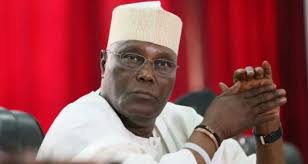
Tasiu Gidari-Wudil, the President of NSE, conveyed this appeal during a press briefing in Abuja on Monday.
According to reports, Umar Salisu, the Director of African Affairs at the Federal Ministry of Foreign Affairs, stated in a letter dated August 21, 2023, that the ministry had received communication from the High Commission of Cameroon concerning the anticipated opening of the dam.
The letter, which was addressed to the National Emergency Management Agency, read in part, “I have the honor to inform that the ministry is in receipt of a Note Verbale from the High Commission of the Republic of Cameroon informing that Cameroonian officials have resolved to open the flood gates of the Lagdo Dam on the Benue River in days ahead due to the heavy rainfall around the dam catchment area in Northern Cameroon.”
Speaking at the event, Gidari-Wudil noted that construction of the dam should be a priority while also calling for the dredging of major rivers to reduce siltation and sedimentation.
He said,” Floods are among the most devastating natural disasters in the world, claiming lives and causing damage to properties and infrastructure.
”In Nigeria, flood affects and displaces more people than any other disaster every year.
“After the 2012 flooding incident, several committees were set up by governments at the federal level and the respective states affected by the flood.
”Also in November 2022, the Federal Government inaugurated a Presidential Committee on flood disasters. The mandate of the committees was to conduct research and develop comprehensive action plans for preventing flood disasters in Nigeria.
”As it stands today, the recommendations of studies conducted by the committees are yet to be fully implemented.”
He additionally urged the government to strengthen current policies and introduce new legislation to safeguard the environment against human-induced impacts arising from industrialization, urbanization, and climate change.
Regarding the recurrent instances of building collapses in the nation, Gidari-Wudil linked the ongoing occurrences of such incidents nationwide to the private sector’s contribution. He accused them of compromising building standards by engaging unqualified individuals in construction activities.
He added, “If you take the statistics of building collapse in the country in the last 20 years, government buildings involved in collapse is just 10 percent, it is private sectors that are compromising.
”That is why government projects are more expensive because they make use of professionals but in private projects, the prices are usually beaten down and as such will employ the services of someone who is not an engineer. In all building collapses in this country, only a few of these incidences involve our members and once we know, they are sanctioned.
“For instance, in the Ikoyi building collapse incident, approximately three engineering firms were involved in that project. Our standard procedure at NSE is to thoroughly investigate all engineering failures, and this is the approach we should follow,” he remarked.
Discussing ministerial appointments, the head of NSE pointed out that President Bola Tinubu appointed just three engineers across his ministerial portfolios, which he deemed inadequate considering the presence of eight engineering-focused ministries.
He went on to urge Tinubu to increase the number in future considerations, emphasizing, “We firmly believe that only engineers can effectively serve in engineering ministries.”
Regarding the removal of petroleum subsidies, he acknowledged the society’s support for the removal but criticized the lack of sufficient measures to alleviate the impact on Nigerians. The NSE president also disclosed the society’s alignment with the Federal Government’s National Digital Economy Policy and Strategy. He mentioned plans to establish an innovation hub that would transform into Nigeria’s own “Silicon Valley” shortly.
“As the world progresses into the era of the 4th Industrial Revolution (4IR), we have envisioned the NSE Smart Innovation Hub as a catalyst for a digital Nigeria, aligning with the federal government’s National Digital Economy Policy and Strategy.
”Realising that a SMART office project is a growing concern that requires time and continuous improvement, I have set up a trustee to undertake all it takes to bring the project to full attainment.
”However, I am happy to announce to you that we have reached an appreciable stage and by the grace of God, the ‘NSE SMART INNOVATION HUB’ will be officially launched on Wednesday, September 13, 2023,” he said.
He further emphasized that the hub would function as a focal point for addressing technology and innovation-related challenges through research and development. Its purpose would extend to enhancing business practices, while also serving as a model with the potential to contribute significantly to the economic and technological progress of the nation.
In addition, the hub will encompass essential features such as an Artificial Intelligence and Internet of Things Laboratory, Automation and Engineering Laboratory, Virtual and Physical Offices, and an e-Library.