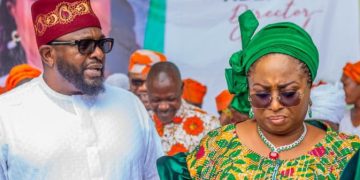
Chief Olabode George, an esteemed Elder statesman, expressed his heartfelt prayers for the resurgence of Nigeria. During the fifth annual lecture of Freedom Online, which centered around the theme “2023-2027: Nigerians, elected leaders, and expectations,” held at the Sheralton Hotel in Lagos, George, a retired Naval Commodore and former Governor of Old Ondo State, donned the intercessor’s attire.
George, as the distinguished guest of honor, decided to focus his address on matters beyond politics, delving into the spiritual realm. He emphasized the urgent need for financial probity, good governance, and accountability in Nigeria. Drawing parallels to the challenges faced by the biblical Prophet Micah and the ancient city of Jerusalem in Judah, George highlighted the similarities between the woes of Nigeria today and those of the historical context.
His fervent hope and prayer were for Nigeria to overcome its current predicaments and embark on a path of rejuvenation, prosperity, and progress. Chief Olabode George was a champion of integrity, effective leadership, and transparency, and he sought to bring about positive change and renewal for the nation.
He said, “Rather than talk politics, I will be very spiritual. It is time for our nation to put the Almighty God first. I have
“I have witnessed, since 1952, all the talking and hullabaloo of our political life. I was old enough to witness the first republic under Tafewa Balewa and all that went on.
“Have we been managing the resources of our land for the benefit of our people? I have seen the top of the mountain and the bottom of the valley. There is nothing in life; the way elected leaders take life as if there will be no tomorrow… Where are those leaders of yesterday?
“Everything happening in Nigeria today happened in Judah, Jerusalem during the time of Prophet Micah. There was a promise at the end of it. We will rise again if we follow the dictates of God and have fear of God in our interactions with other Nigerians.
Expanding on his remarks, Chief George emphasized the imperative for Nigeria to reevaluate the 1999 constitution, asserting that it is inadequate to lead the nation to its envisioned prosperity.
He underscored the significance of adopting a people-centric constitution that prioritizes the empowerment of individuals and guarantees a bottom-up approach to governance.
Chief George advocated for a constitutional framework that facilitates decentralization, enabling the establishment of state and local government police forces. Additionally, he emphasized the importance of granting each state autonomy over its resources.
By calling for a comprehensive constitutional reform that promotes inclusivity, devolution of power, and resource control, Chief George sought to lay the foundation for a more equitable and efficient governance structure in Nigeria. He believed that such reforms would contribute to the overall development and progress of the nation.