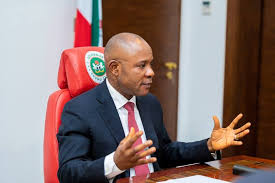
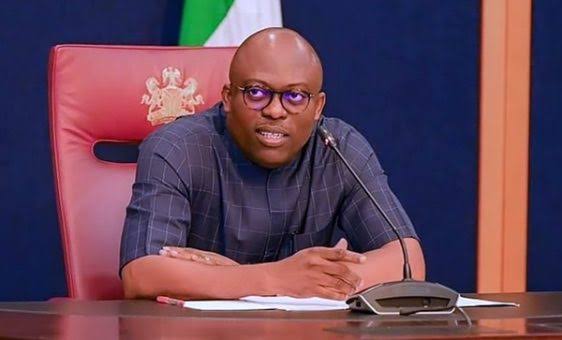
Speaker of the House of Representatives, Hon. Tajudeen Abbas has said that the 10th House would run its affairs transparently to Nigerians.
He said the National Assembly would open its finances to the public as the Legislature scrutinizes utilization of funds by the Executive and the Judiciary.
Abbas made this known on Tuesday in his welcoming address to members of the House as they returned from Sallah break. The address was titled ‘In The People’s House For The People’s Mandate.’
The speaker stated: “As legislators, we know that the citizens’ engagement is the fulcrum of any legislature. The 10th Assembly will adopt the ‘Open NASS’ project. The ‘Open NASS’ project will not only affect the conduct of oversight and law-making but will equally cover issues around the funds of the National Assembly.
“If, as a legislature, we ask question about how other arms of government utilise appropriated funds, we must equally be open to taking such questions from citizens. This equally requires having functional constituency offices and regular interactions with our constituents. We will strive to return the legislature to those who own it through regular, meaningful, and productive engagement.”
Abbas also stated that lawmakers “cannot gloss over the capacity challenges this 10th House will have to grapple with” as they settle down to work. This, he noted, was due to the high turnover rate of the legislature, which he said was, perhaps, the highest in the country’s democratic journey since 1999.
He noted that “It is in this regard that I implore you to consider competence, capacity and experience in choosing your aides. There is an array of experienced hands within and outside the National Assembly you can rely on. Your success as a legislator is largely dependent on the quality of your legislative aides as well as the legislative bureaucrats.
“In view of the high legislative turnover, which has become part of our democratic culture, the House, going forward, will consider professionalizing the legislative aides services to ensure that new members have a smoother transition into the Assembly.”
The speaker expressed hope that members of the House had the opportunity to interact with constituents during the recess, “to hear their concerns and to witness first-hand the challenges they face in their daily lives.” According to him, the connection and bond between representatives and the people they serve lies at the core of their democratic principles.
“So, as we gather here today, we must recognise the immense responsibility placed upon our shoulders. We have been entrusted with enacting legislation that will address our people’s general well-being and shape our nation’s future. The issues before us are complex, and the expectations of our citizens are high. We must rise above personal and partisan interests and work together for our collective success,” he said.
Abbas added: “We have been called to serve at one of the most challenging times for our constituents and nation. The present administration, which we are part of, is challenged by many economic issues, which include a huge debt profile, a volatile international oil market, rising unemployment, hyperinflation, a high poverty rate, infrastructure deficit, de-industrialisation, and many more. This calls for our immediate attention and action.
“I need not remind us that our constituents are going through so many difficulties following the stoppage of government subsidies on petroleum products. Though taken in the nation’s best interest, this singular action has occasioned increased commodity prices, transportation and operational costs for businesses and the general cost of living. As the Executive comes up with policies and programmes to alleviate the impact of the subsidy removal, we must be ready to respond with the necessary legislative actions in this regard.
“There is no gainsaying the fact that the House of Representatives and indeed, the National Assembly, plays a vital role in this country’s economic trajectory. Consequently, we must proffer legislative reforms to unlock Nigeria’s economic growth and development of our vast human and natural resources. To achieve this, we must focus on opening bottlenecks in critical sectors of the economy through appropriate legislation positioning for emerging industries that will attract foreign and domestic investors and, in turn, create sustainable economic development.
“Our economic challenges are aggravated by the parlous security situation in the country despite the very commendable efforts and tremendous sacrifices of our security personnel. The relationship between the economic crises and the precarious security situation leaves the country in a quagmire as both are fallouts from each other and reinforce themselves.”
The Speaker also stated that notwithstanding the successes of the security forces in protecting lives and property, internal security remains precarious and challenging. “In the course of our recess, the nation witnessed unprovoked attacks on innocent students of the Federal University, Gusau, the killing of farmers in Birnin Gwari, the attacks in the communities in Mangu Local Government of Plateau State, the reported killings in Anambra state and other such cases that are reported and often unreported,” he noted.
He said the House would take adequate and proactive legislative steps toward further strengthening the security forces to rid the country of the criminals.
“I must acknowledge the swift action taken by the President of the Federal Republic of Nigeria, His Excellency Asiwaju Bola Ahmed Tinubu, in injecting fresh ideas into the security sector for the appointment of new security chiefs. We hope the new security chiefs will respond to the security situation with the urgency it requires. On our part, we will provide the required legislative support in the defence of our nation.”
Abbas said while the 10th Assembly is building on the legacies of the previous sessions, the lawmakers must now redefine the modus operandi of legislative business as they advance.
“We shall strengthen committees to conduct oversight of MDAs effectively. Henceforth, oversight duties, including investigative hearings, must be brought to their logical conclusions with reports and recommendations tabled before the entire House for necessary legislative actions. The leadership of the House shall monitor this process to ensure that members conduct themselves appropriately,” the Speaker declared.
Abbas urged the lawmakers to be guided by accountability, transparency and good governance principles. According to him, the trust that Nigerians have placed on the parliament demands nothing less. “We must also ensure that our deliberations and decisions are transparent so that our citizens have faith in the integrity of our legislative processes,” he added, stressing that, “This Assembly is a citizens’ parliament.”
The Speaker stated that the House would pay priority attention to participatory budgeting process and delivery, law reform, electoral reform, women’s participation and inclusion in governance, improved socio-economic conditions, entrepreneurship, employment, health and education, infrastructure, citizens-focused diplomacy, institutional capacity development and citizens engagement, constitutional amendment and restructuring, renewable energy, among others.