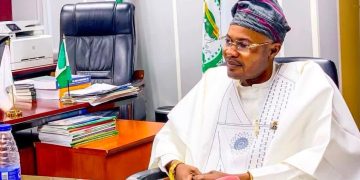
A coalition of Civil Society Organisations (CSOs) has praised the achievement of the chairman of the Economic and Financial Crime Commission (EFCC), Abdulrasheed Bawa, in the fight against corruption in the country.
Speaking at a press conference, the national president of the Campaign for Dignity in Governance (CDG), Razaq Olokoba, said Bawa has succeeded in creating the fear of going to prison among corrupt politicians and fraudsters across the country.
He said, “In the last 7 years records have shown increased competence and commitment, particularly following the appointment of Mr Bawa in February 2021. There was a spike in conviction and recovery across all zones of the country.
“For example, between 2016 and 2019, the number of convictions secured rose from 195 to 1280 and by 2021 the figure had hit an unprecedented 2220, a value amounting to 98.47 per cent of all cases brought before the court of law. In the same year, over N150 billion was recovered, with recovery in other currencies such as USD 386 million, British pound 1.182 million and 156000 Euro.
“The record for the year 2022 is even more startling for the forces of corruption and encouraging for the anti-corruption forces as the total number of convictions in the year was 3785 a 70 per cent increase over 2220 recorded in 2021. In the same year, the percentage conviction was 98.93 per cent. It is noteworthy that these convictions highlight the competence of the enforcement team in ensuring arrests and prosecution based on concrete evidence rather than capricious reasons and intentions.
“The monetary recovery was also higher in the year 2022, with over N260 billion, USD 509 billion, 2.196 million Euros, 876.138 British pounds and millions of other foreign currencies recovered. These values exclude assets such as automobiles, electronics, machines, factories, hotels, petroleum products and minerals such as lithium, which were recovered in the same period and worth billions of naira.
“Thus, the EFCC has not only become the nightmare of corrupt politicians and public officers but that of money launderers, yahoo boys and local fraudsters, ensuring no resting place for them and reposing confidence of the mass of our people in the possibility of building a greater nation. Without a doubt, it remains one government agency that has moved from the position of being regarded with much pessimism and misgiving to that of being revered as an enviable entity.
“Corrupt politicians and public officers across the party divide, fraudsters across geopolitical zones and gods of men across religions and faiths now know that the fear of EFCC is the beginning of wisdom. For the first time, Nigeria has witnessed a five-year period of the consistent, unrelenting, unbiased and up-scaling battle against corruption that has the support of well-meaning citizens because of the transparency and indisputable result.”
Olokoba said Nigeria would enjoy more fight against corruption if the President-elect, Bola Tinubu would extend the tenure of Bawa as EFCC chairman. There are many reasons why it would be counter-productive to want to change the winning team headed by Bawa.
“For us in the Civil Society, and beyond the details of the great work the EFCC team has been doing, is the fact that incorruptible and fearless individuals like Abdulrasheed Bawa continuously deserve a place in the fight against corruption in Nigeria.
“His integrity, intellectual prowess, dedication, proficiency of his legal team in unravelling thorny cases and ability to not only ensure conviction through logical argument but also be mindful of ensuring justice even to the culpable accused person stand him out as a public service juggernaut not to be toyed with in the fight against corruption.
“He represents to us an exemplar in the fight against corruption in the present and in the future. The anti-corruption efforts need more like him. Mr Abdulrasheed Bawa and his like in this effort still have more to contribute and more to teach to an upcoming generation of anti-corruption enthusiasts, practitioners and experts in this unique field of democratic institution building,” he said.