18 candidates in total are jostling to succeed President Muhammadu Buhari but only three of them are seriously considered as front runners. OBA OLUSESAN x-rays the chances of Peter Obi of the Labour Party, Atiku Abubakar of the Peoples Democratic Party and All Progressives Congress flag bearer Bola Tinubu as Nigerians are casting the votes across the country.
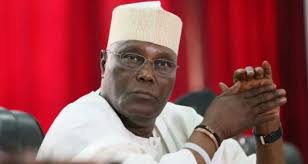
Atiku Abubakar (PDP)
A veteran of many wars and the most experienced of all contenders given the fact that this is the sixth time he will be vying to become Nigeria’s president but the third time he would be on the ballot.
Atiku contested for the presidential ticket of the Social Democratic Party against the eventual winner MKO Abiola in the 1993 elections. He was on the ballot in the 2007 general election after securing the presidential ticket of the Action Congress; he failed to pick the PDP ticket for the 2011 polls; he lost to Goodluck Jonathan just as he lost the primaries to Muhammadu Buhari in 2015 in the APC.
The former vice president ran on the platform of the main opposition party PDP in 2019 and he is flying the party’s flag again in 2023.
He has been contesting for the same position for upward of 30 years and the understanding of the terrain should confer on him an advantage over his competitors but his ambition is now encumbered by a number of factors.
It is pertinent to note that the emergence of Obi of the Labour Party who is regarded as the symbol of the third force incredibly altered the dynamism in a way that the traditional 14 states of the PDP are no longer in the firm grip of the main opposition party and this could hugely reflect in the outcome of the polls.
The PDP has always been successful in FCT, Edo, Delta, Rivers, Cross-river, Akwa-Ibom, Bayelsa, Enugu, Imo, Anambra, Abia, Ebonyi, Plateau and Taraba but Atiku could be greatly hurt in these states by the growing influence of Obi who ran on the same ticket with him just four years ago.
It will be hard for him to take the southeast which has always been the traditional stronghold of the PDP and the strength of the Obidient Movement in the South-South could also decimate his chances in that region despite choosing his running mate from the zone.
Instructively, of further concern for Turakin Adamawa is the fact that he might not arrogate votes from the North-East where he comes from due to the popularity of the vice presidential candidate of the ruling APC Kashim Shettima who has a strong presence in the region and could easily win for his party Borno and Yobe states.
He could also be undone by the presence of Rabiu Kwankwaso of the New Nigeria Peoples Party who is a strong force in the north, especially in Kano and Jigawa.
Atiku’s standing in the three major voting hubs of Lagos, Kano and Rivers is weak given the different circumstances. Lagos is a turf savagely dominated by Tinubu, and the sympathy generated by the PDP in the commercial capital of the country in the past would now be enjoyed by Obi of the Labour Party.
Kano, with about five million votes, is another battleground but the strength of the APC and the presence of Kwankwaso would make it difficult for Atiku to win the state.
Rivers, another PDP fortress, has now been decimated by the feud between Governor Nyesom Wike and the party’s presidential candidate. Wike has vowed not to support Atiku because of the alleged breach of power rotation in the party which has the presidential candidate and the chairman of the PDP coming from the north.
Atiku will certainly win at least 25 votes in all states of the federation including the FCT but given the circumstances that have burdened his ambition, he might not win the popular votes. He could also be a candidate should the polls require a second ballot.
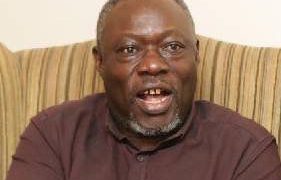
Peter Obi (Labour Party)
Since the advent of the Fourth Republic, this year’s election comes with a peculiarity that has changed the dynamism of the political turf. The emergence of Obi as the face of the third force has shifted the narrative from the two-horse race that had characterised elections since 2007.
Obi’s message resonates especially with the youths who see him as a departure from the old school and a breath of fresh air.
He has enjoyed online visibility in a manner that had never been seen with politicians in the past months but the jury is still out on whether the social media strength would translate to electoral victory.
Obi who ran on the same ticket with Atiku four years ago would be the albatross of his former boss as the majority of his votes are projected to come from states dominated by the PDP.
In reality, Obi is not quite popular in the north and he would expect that the majority of his votes would come from the south. He is expected to dominate the southeast where he comes from even though the PDP with a stronger structure than his Labour Party would pose a serious challenge. He is expected to win at least four of the five states in that zone.
He is also hugely popular in the south-south but the strong political structure of the PDP coupled with the fact that Governor Ifeanyi Okowa of Delta State is also from the region might not make him win all of the votes in the region. He is likely going to do well in Rivers, considering the fact that Wike is not working for the PDP and has not openly declared support for Tinubu.
The youths in Delta may root for him but Okowa will surely wield the incumbency power to sway the votes in the way of the PDP.
PDP is strong in Edo with Governor Godwin Obaseki intensely working for Atiku while the strength of the APC can also not be over-emphasised which could pose a problem for him and his Obideient Movement. It is hard to predict how he will also fare in Akwa Ibom, Cross River and Bayelsa where the two dominant parties are still strongly oiling their machinery.
He will do well in Benue State as Governor Samuel Ortom claimed he is working for him and political watchers believe he could also get substantial votes in the Christian-dominated states in the north.
Obi is now hugely popular in Lagos, especially among the youth and the huge presence of residents of Igbo extraction in the state makes his position stronger and will certainly give Tinubu a run for his money.
However, it is difficult to predict how deeply LP would hurt APC in Lagos but Obi certainly can’t defeat Tinubu in the state.
Obi has been projected to win the votes in several polls but the political realities and peculiarities of Nigeria are not supporting such predictions. His party doesn’t have the geographical spread as evident in the fact it fielded candidates in fewer positions than other major parties. Obi may win some states but the realities on the ground showed that with the strength of his party, he might not get the majority votes and not even the statutory required 25 per cent in at least 24 states.
Bola Tinubu (All Progressives Congress)
Known as a kingmaker, the former Lagos State Governor is aiming for the big prize himself.
Tinubu entered the race with some baggage that weighed down on his ambition; The circumstances of his birth, his true identity, questionable academic achievement, perception on corruption and weak health status have dominated discourse throughout the campaign.
He is also been haunted by the fact that he played the most pivotal role in the enthronement of Buhari’s administration which has been largely considered a failure.
In what looked like the admittance of the APC-led government, Tinubu’s campaign had been hinged on his achievement as Lagos Governor and not on Buhari’s scorecard.
He is going to be hurt by the failure of his party in power and APC’s weak standing was compounded by Buhari’s new naira policy.
The former Senator is contesting for any position for the first time since he exited the office as Governor in 2007 but declared that the Aso Rock job has been his lifelong ambition.
He is riding on the support he enjoys from the Northern Governors in APC who have strongly stood behind him. They played a major role in his emergence as the party flag bearer as Tinubu won the primaries in a landslide victory and they have been unwavering in their standing with him throughout the campaign.
Gombe, Sokoto, Jigawa, Zamfara, Kano, Kebbi, Bauchi, Katsina, Yobe, and Borno states have always voted against the PDP since 2003. These states account for the highest number of voters and voter turnout in elections and Tinubu could inherit this base.
Atiku may give him a run for his money in those states though but if the APC Governors fully deploy their structure to his benefit, he would still triumph.
APC doesn’t usually perform well in the northcentral states of Benue, Plateau, Nasarawa, FCT and Niger but Tinubu could win in Kwara and Kogi where APC structure is strong and still get a minimum of 25 per cent in other states.
He is unlikely going to make waves in the Southeast where Obi is expected to dominate but the growing structure of APC in states like Imo where the party has ruled since 2015 and Ebonyi where the influence of Governor Dave Umahi is reverberating could make him spring surprises in the region.
He is expected to dominate the Southwest where his party is ruling in four states; this is his fortress and despite the fact that the APC is not the ruling party in Oyo and Osun States, Tinubu is still expected to clear the votes in these places.
He is likely going to do well in three key states of Lagos, Kano and Rivers.
Lagos is his state of origin where has held sway as the sole power broker while he is going to strongly compete for the majority of the votes in Kano where Governor Umar Ganduje has fully declared his support.
It is also believed that he had struck a deal with Governor Wike of Rivers to work for him.
He has been projected to win at least 25 percent in almost all the states and probably win the popular votes but if the elections would need a re-run, he certainly would be on the second ballot.