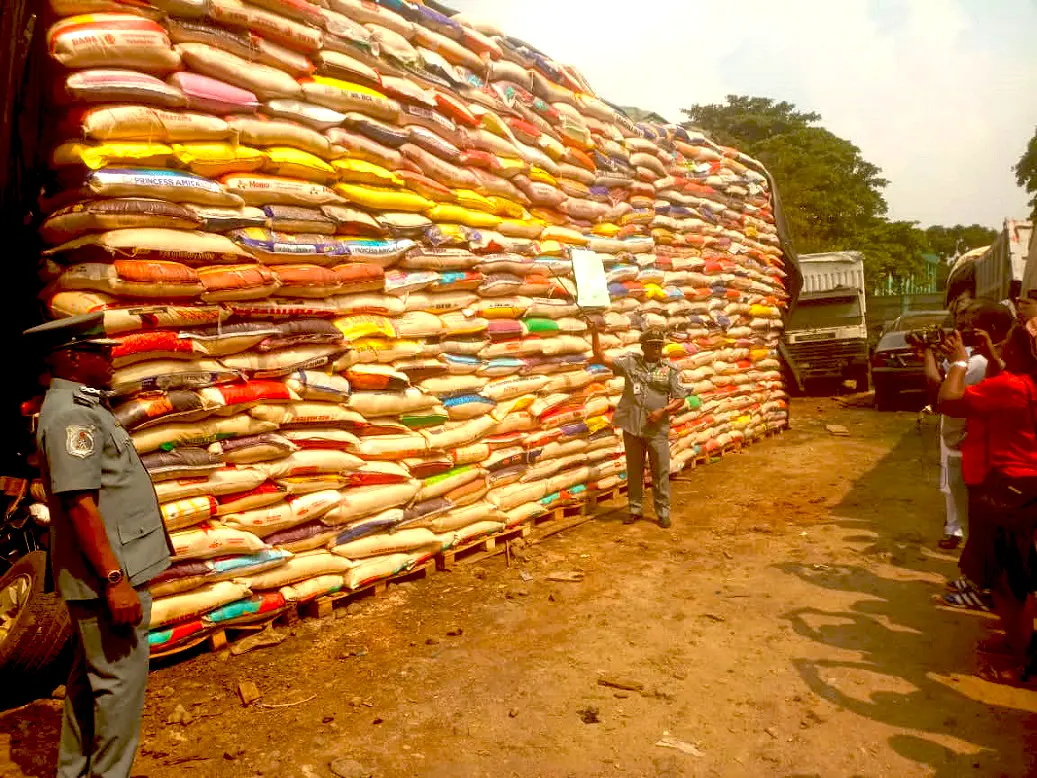
Farmers under the umbrella of the All Farmers Association of Nigeria (AFAN) have faulted the Federal Government’s decision to reduce import duty on rice, warning that the move could discourage local production and threaten national food security.
The President of AFAN, Mohammed Magaji, described the policy as unfavourable to Nigerian farmers, noting that it would weaken their ability to compete with cheaper imported rice.
“It discourages Nigerian farmers from going to the farm, honestly speaking, because there is no good price, there is no market,” Magaji said.
He lamented that the decision comes at a time when the cost of farm inputs such as fertilisers and agrochemicals continues to rise.
“Unfortunately, the price of inputs, including fertilisers, agrochemicals and the rest, are going up. The government should have a rethink on this policy,” he added.
Magaji urged the government to prioritise local production by reviewing the tariff reduction.
“We are appealing to the government to have a rethink on it and give us a chance to produce what we eat and eat what we produce,” he said.
Also reacting, the Chief Farmer of Africa and Team Lead at JetFarmsNG, Jeremiah Olanrenwaju, described the development as a major setback for local rice farmers.
According to him, the reduction of import duty on bulk rice from 70 per cent to 47.5 per cent, and broken rice to 30 per cent, would make imported rice cheaper and more attractive in the market.
“This policy is a serious setback for local rice farmers. It will put immediate pressure on locally produced rice,” he said.
Olanrenwaju warned that farmers, already grappling with high production costs, logistics challenges and limited access to finance, may be forced to sell below cost at harvest.
“At harvest, many of us may be forced to sell below cost, leading to losses and discouraging further investment in rice production,” he stated.
He advised farmers to tread cautiously during the current planting season, warning against unplanned expansion.
“This is not the year to expand blindly. Farmers should focus on efficiency, secure buyers early, and avoid overproduction without clear market access,” he said.
Olanrenwaju further cautioned that fluctuating policy directions, especially in an election year, could worsen uncertainty in the sector and negatively impact food production.
“While importers may benefit from this policy, local producers face uncertainty that could affect supply in the long term,” he added.
He called on the government to urgently introduce support measures, including input subsidies, affordable financing and guaranteed offtake arrangements, to cushion the impact on farmers.
“Supporting local farmers now is essential to protect national food security and prevent deeper reliance on imports,” he said.
The Federal Government’s tariff adjustment has continued to generate mixed reactions, with stakeholders warning that without adequate safeguards, the policy could undermine efforts to boost local rice production.