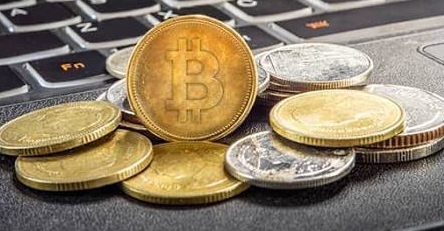
Nigeria’s digital assets – cryptocurrency and virtual recorded about $96 billion in transactions , Director-General of the Securities and Exchange Commission, Emomotimi Agama said on Monday in Abuja.
SEC DG disclosed this during a Citizens and Stakeholders Engagement Session organised by the Federal Ministry of Finance in Abuja, noting that the size of transactions within the digital asset space makes it necessary for regulators to bring the sector under proper supervision.
Agama said regulatory framework for the sector was strengthened with the enactment of the Investment and Securities Act 2025, which empowers the commission to regulate digital assets and other emerging financial technologies.
He explained that the new law also reaffirmed the SEC as the apex regulator of the capital market while introducing provisions aimed at monitoring systemic risks and aligning Nigeria’s market operations with global standards.
Agama said the Nigerian capital market has also continued to support investment activities across the economy, noting that the commission approved ₦3.68 trillion worth of new capital market issues in 2024, including equities and fixed income instruments.
He added that the market played a key role in strengthening the banking sector during the recent recapitalisation exercise, with more than 31 banks raising funds through the capital market to meet new capital requirements.
The SEC Director-General said the performance of the market has improved significantly in recent years, with total market capitalisation rising from ₦55 trillion in 2024 to about ₦127 trillion currently.
He also noted that the capital market’s contribution to the economy has increased, with the market capitalisation-to-GDP ratio rising from about 13 per cent to roughly 33 per cent.
According to him, the commission has taken several steps to strengthen investor protection and maintain confidence in the market.
He disclosed that the regulator has issued over 90 advisory notices warning Nigerians about suspicious investment schemes and risky financial offers.
Agama said the commission has also intensified efforts to clamp down on fraudulent investment schemes, including Ponzi operations, while working closely with the Nigeria Police Force to investigate and prosecute offenders.
He warned that many people who fall victim to such schemes often invest in unregistered platforms promising unrealistic returns, stressing that investors should always verify whether an investment opportunity is approved by the SEC.
The SEC boss said the capital market has also supported infrastructure development across the country through bond issuances by state governments.
He explained that several public projects including markets, stadiums and other infrastructure have been financed through subnational bond issuances raised in the capital market.
According to him, Nigeria protects investors in state bonds through the Irrevocable Standing Payment Order (ISPO) system, which allows loan repayments to be deducted directly from states’ allocations from the Federation Account.
Agama said the commission has also established an Office of Municipal Fund Development to help state and local governments access capital market financing for development projects at the grassroots level.
He added that the SEC supported the launch of the Mortgage Refinancing and Infrastructure Fund (MREIF) to help address Nigeria’s housing deficit by providing long-term funding that allows Nigerians access to mortgages at single-digit interest rates.
Looking ahead, he said the commission is working to deepen the market by raising the capital market capitalisation-to-GDP ratio from about 30 per cent toward levels seen in emerging economies such as India, where the ratio stands at about 92 per cent.
Also speaking at the session, the Permanent Secretary of the Federal Ministry of Finance addressed concerns about the performance of the federal budget, explaining that several factors have affected implementation.
He said Nigeria has faced challenges meeting the oil production benchmark of about 2.1 million barrels per day, while fluctuations in global oil prices have also affected revenue.
The Permanent Secretary added that the budget benchmark was set at $75 per barrel, but oil prices at some point fell below $60 per barrel, reducing expected government revenue.
He noted that rising debt servicing obligations and increased salary commitments have also placed pressure on available funds.
According to him, the government is taking steps to improve the situation through regular monitoring of revenue and expenditure.
He said the ministry now holds weekly cash management meetings every Monday to review government finances and identify ways to boost revenue performance.
The Permanent Secretary added that the government expects improvements once Nigeria returns to operating a single budget cycle, noting that plans are underway to collapse overlapping budgets so that the country will run only one national budget from 2026 onward.