The Nigeria Revenue Service ( NRS) formerly known as Federal Inland Revenue Service ( FIRS) is saddled with revenue target of N40.711 trillion in 2026 fiscal year.
The figure is an increase above N28.3 trillion revenue generated in 2025, a feat consistent with the Revenue Service’ continuous growth over the past few
years .
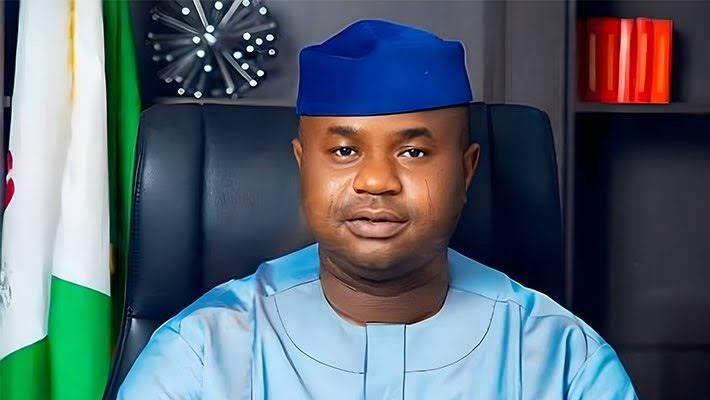
Executive Chairman of the Nigeria Revenue Service (NRS) Dr. Zacch Adedeji on Tuesday tasked Service’s leaders to move away from comfort, routine, titles, and past habits, and instead become the kind of leaders the present moment demands. The occasion was the 2026 NRS’ Leadership retreat which was held in Abuja.
Adedeji said NRS represents a clear break from the past and signals the beginning of a new institutional era that requires new ways of thinking and leading.
“Past achievements, positions, and structures will not be enough to secure the future of NRS; success will depend on adaptability, growth, and a higher standard of leadership excellence. Leaders often fail not because they lack intelligence or strategy, but because of hidden beliefs about leadership, themselves, and others that quietly influence decisions and behaviour”.
“Even the best strategies, reforms, and roadmaps can fail if leaders do not confront internal barriers and unspoken assumptions that shape how they lead and delegate. Internal blockers in organisations often appear subtly and are disguised as good intentions rather than open resistance to change.
“These blockers show up when leaders believe they must always have the answers, leading to command-style leadership instead of empowerment.
“They also appear when leaders confuse tight control with accountability, creating unnecessary bottlenecks and slowing progress”, he said.
Continuing, he said Problems arise when leaders expect everyone to work at the same speed, style, and standard, ignoring that strong results can be achieved through different approaches.
“The first priority of the retreat is not strategy, structure, or technology, but leadership self-examination.Leaders cannot credibly guide others into a new era without first confronting their own internal barriers”.
The Executive Chairman acknowledged that this reflection also applies personally to him, not just to others.
He admitted holding the belief that others should perform tasks the same way and at the same pace as he does, which affected delegation and performance assessment.
The future of NRS will be shaped more by leaders’ humility, courage, and clarity than by policy documents.
“NRS stands at a critical point in one of the most important institutional transformations in Nigeria’s history. The credibility of Nigeria’s revenue system and confidence in the wider economy rest heavily on the actions of NRS leadership” he said.
In a slide presentation by Amina Ado Kurawa – Executive Director, Government & Large Taxpayers , she said if the NRS .was able to generate this amount( N40.711) revenue in 2026, that would mean that they will surpass the 2026 budgeted revenue of ₦34.7 trillion by year’s end.
According to Amina Ado Kurawa Year-on-year growth is expected to remain positive, although achieving the 2026 target will depend on stronger enforcement, wider compliance coverage, and operational excellence under the new NRS framework .
Oil revenue is projected to grow modestly by about 1.4 per cent, reflecting stable output but lower benchmark prices. The increase is expected to be driven mainly by Company Income Tax from oil operations and PPT/HCT .
Non-oil revenue is projected as the main growth driver, with a targeted increase of 37.9 per cent, rising to ₦24.836 trillion in 2026, compared to the ₦21.5 trillion recorded in 2025.
For the first time, royalty revenue is fully integrated into the revenue framework, reflecting the expanded mandate of the Nigeria Revenue Service and the creation of a new revenue stream .
Within non-oil taxes, Company Income Tax, Value Added Tax, and the Development Levy are expected to contribute the largest share of growth in 2026 .
To achieve the 2026 revenue target, the Service plans continuous engagement with stakeholders on new tax laws, automation of PPT/HCT and royalty assessments and payments, issuance of regulations and guidelines to support compliance, and stronger audit quality and faster audit closure timelines .
Other planned actions include more aggressive collaboration with sub-national governments and federal MDAs to improve VAT and withholding tax remittances, as well as enhanced data analytics using e-invoicing, government contract data, and other digital sources.
Amina Ado Kurawa also disclosed that NRS recorded a strong performance in 2025, with total revenue collection rising by 30.4 per cent to ₦28.3 trillion, compared to ₦21.7 trillion in 2024, exceeding the annual target of ₦25.2 trillion by 12 per cent .
Actual collections in 2025 amounted to 112 per cent of the annual target, reflecting improved efficiency and stronger compliance across revenue streams .
Quarterly performance showed notable strength in the middle of the year, with the Service achieving 129.7 per cent of its Q2 target and 131.9 per cent of its Q3 target, although Q1 and Q4 fell slightly below target at 96.9 per cent and 90.4 per cent, respectively .
Oil tax revenue reached ₦6.8 trillion, representing 95 per cent of the 2025 oil revenue target. Monthly oil collections averaged about ₦600 billion, with some fluctuations across the year .
Non-oil taxes performed strongly, with collections hitting ₦21.4 trillion, which is 119 per cent of the annual target. Average monthly non-oil revenue stood at approximately ₦1.5 trillion .
Year-on-year analysis showed oil tax revenue grew by 19 per cent, increasing from ₦5.8 trillion in 2024 to ₦6.8 trillion in 2025, while non-oil tax revenue rose sharply by 35 per cent, from ₦15.9 trillion to ₦21.5 trillion .
Company Income Tax (CIT), Value Added Tax (VAT), and Petroleum Profits Tax/Hydrocarbon Tax (PPT/HCT) were the strongest-performing tax types, with most major taxes exceeding their targets. Capital Gains Tax recorded exceptional growth, driven largely by divestments in the oil and gas sector .
Monthly revenue performance in 2025 exceeded that of 2024 in every month except October, which fell short by about 5 per cent .
Filing compliance improved consistently between 2022 and 2025 across key tax types, including CIT, VAT, WHT, stamp duties, and electronic money transfer levy, reflecting better taxpayer engagement and enforcement .
The success recorded in 2025 was attributed to stricter enforcement of penalties, elimination of routine filing extensions, organizational restructuring carried out in early 2024, improved staff remuneration, expansion of the withholding tax system, automation initiatives, and policy and tax law reforms.
The Minister of Finance and Coordinating Minister of the Economy Mr Wale Edun in his address drew attention to the harsh global financial reality facing developing countries, using 2024 figures to explain the imbalance.
In 2024, developing and emerging economies paid about $163 billion in debt service to external creditors.
During the same period, these countries received only $42 billion in overseas development assistance (ODA).
They also received about $97 billion in foreign direct investment (FDI) from abroad.
When combined, total inflows from ODA and FDI amounted to $139 billion ($97 billion + $42 billion).
This means developing countries sent out $163 billion but received only $139 billion, resulting in a net outflow of resources.
The Minister stressed that developing countries are now giving more money to the world than they are receiving, reversing the traditional flow of financial support.
Because of this imbalance, external financing can no longer be relied upon as the main driver of development.
The Minister said this reality makes internal fiscal effort and domestic revenue mobilisation the primary anchor of fiscal sustainability.
He added that countries must depend on their own revenue generation and savings to fund investment and development going forward.
This context underscores why the role of the Nigeria Revenue Service (NRS) is central and unavoidable in Nigeria’s economic strategy at this time.