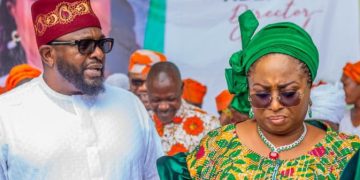
Chairman of the House of Representatives Committee on Electoral Matters, Adebayo Balogun Thursday called for urgent reforms in the nation’s electoral legal framework.
Balogun stated this during a consultative meeting with election petition lawyers organized by the National Assembly Joint Committee on Electoral Matters in partnership with the Policy and Legal Advocacy Centre (PLAC) and supported by the UK Foreign, Commonwealth and Development Office (FCDO).
He noted that while the Electoral Act 2022 introduced critical reforms—such as the Bimodal Voter Accreditation System (BVAS), the INEC Result Viewing (IREV) Portal, early funding for INEC, and stricter electoral timelines—the 2023 elections exposed significant loopholes that require urgent legislative attention.
According to him, the continuous search for a globally acceptable Electoral Act that will stem electoral malpractices and improve confidence in the electoral process, they must engage with all critical stakeholders involved with electoral Matters, before, during and after elections.
He stressed the crucial role of election litigation lawyers in interpreting and testing the law, stating that their courtroom experiences provide invaluable insights into areas that need strengthening, clarification, or amendment.
According to him, those directly involved in election disputes understand the weaknesses in the system better than anyone else, making their contributions essential to the amendment process.
The lawmaker identified other key areas requiring legislative review, to include the need to streamline election dispute resolution timelines to ensure that pre-election cases are resolved before general elections and also that post-election disputes are concluded before the swearing-in of elected officials.
He further called for a review of penalties for electoral offences, arguing that stronger sanctions are necessary to deter malpractices and ensure credible elections.
In his remarks, Chairman of the Senate Committee on Electoral Matters, Senator Sharafadeen Abiodun Alli, emphasised the urgent need to amend Nigeria’s electoral laws to address persistent legal challenges and restore public confidence in the electoral process.
He underscored the crucial role of legal practitioners in shaping a more effective electoral legal framework.
Alli acknowledged that election litigation lawyers, with their vast courtroom experience, are vital stakeholders in electoral reforms.
The President of the Nigerian Bar Association (NBA), Mazi Afam Osigwe, also lamented the challenges of Nigeria’s electoral legal framework, particularly the role of the judiciary in electoral disputes.
Osigwe noted that though the Electoral Act 2022 was initially hailed as one of the most progressive pieces of electoral legislation, subsequent judicial interpretations had significantly distorted its intended impact.
He expressed concern over the contradictory and inconsistent judicial decisions that had emerged from recent election petitions.
The Executive Director of the Policy and Legal Advocacy Centre (PLAC), Clement Nwankwo, commended the National Assembly’s Joint Committee on Electoral Matters for its commitment to electoral reform.
He acknowledged that members of the committee had played a crucial role in the passage of the Electoral Act 2022 and expressed satisfaction that they remained committed to refining the law further.
Nwankwo emphasised the significance of collaboration between the House and Senate committees in ensuring that amendments to the Electoral Act are completed efficiently.
The President of the Senate, Godswill Akpabio, who declared the event open, emphasised the importance of collaborative efforts in addressing Nigeria’s electoral legal challenges.
Represented by Senator Abdullahi Yahaya, he assured stakeholders that their contributions will be given serious legislative consideration.